
A Paradigm Shift in Industrial Logistics
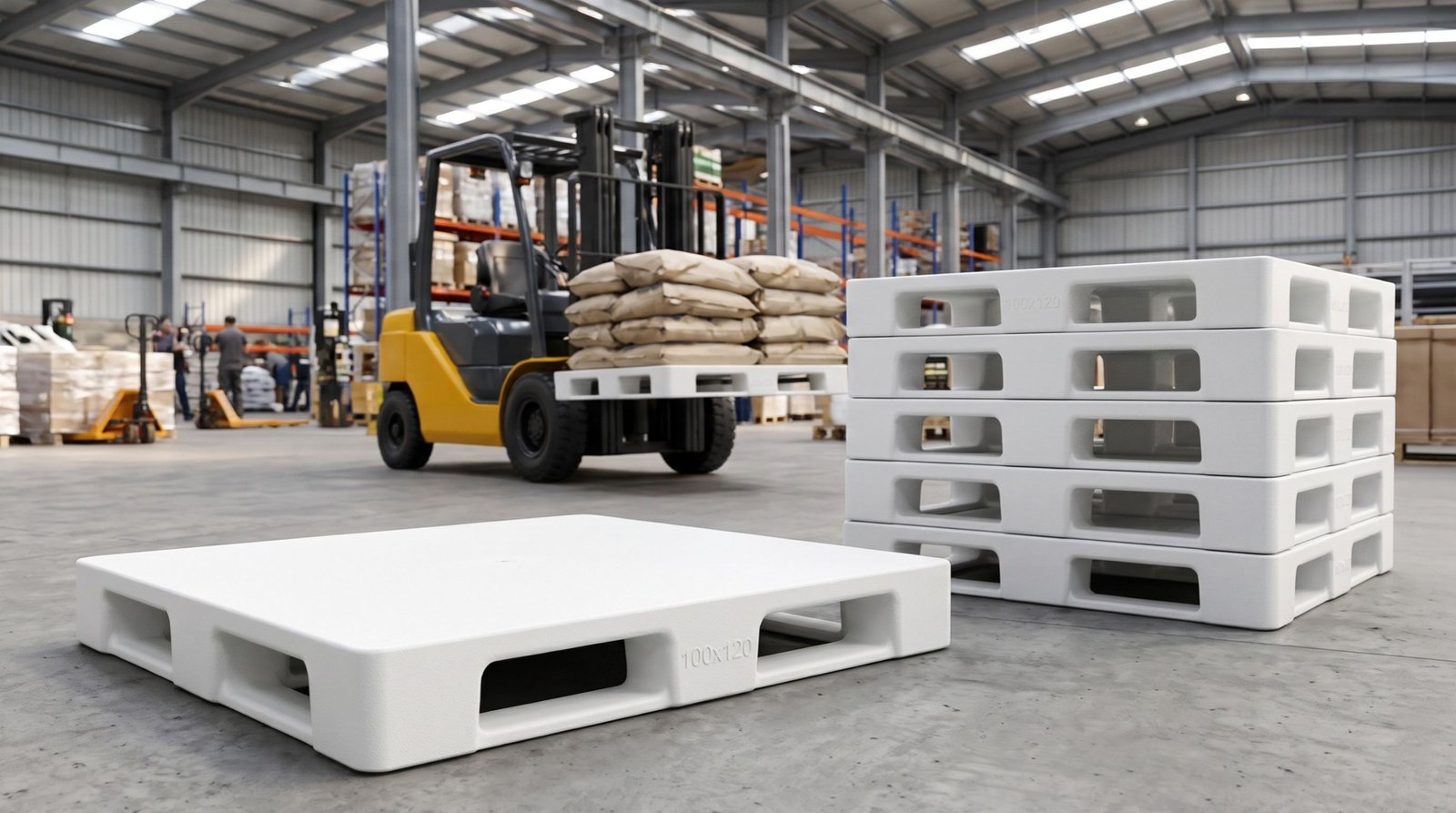
Why choose rotationally molded plastic pallets for heavy-duty operations?
Plastic pallets have become standard in logistics and warehousing. However, in closed-loop systems, under dynamic loads approaching or exceeding two tonnes, with aggressive chemicals or demanding washdown procedures, standard injection-molded pallets—which account for much of the market—can reach their physical limits. Steel-profile reinforcement may introduce further operational concerns, including corrosion, deformation and food-safety risks.
This raises a fundamental engineering question: should a pallet be patched with steel, which behaves differently from plastic, or should the plastic be processed using the right technology to create a stress-free, one-piece structure?
Rotationally molded polyethylene (PE) pallets embody the latter approach: engineering from first principles.
Why rotational molding?
Manufacturing technology is a key factor in how a plastic pallet behaves under impact. In injection molding, molten material is forced into a mold at very high pressure. This can create residual stresses in the product. A pallet that looks flawless may crack or break when struck by a forklift tine because of those internal stresses.
Rotational molding uses no such pressure. PE material rotates slowly on two axes inside a heated mold, melts and coats the mold walls through heat and gravity.
Stress-reduced structure: Without high-pressure injection, the material can flex under impact, absorb energy and return towards its original shape, reducing the risk of cracking.
Optimized wall thickness: The geometry of the process can create greater wall thickness at corners and edges, where pallets are more likely to be struck.
One-piece, weld-free body: Rotationally molded pallets are produced as one piece, without nails, screws, welds or joints. This helps limit places where liquid can enter, bacteria can collect or the structure can separate.
Applications and real operating conditions
Our rotationally molded PE pallets are available in 80 × 120 cm and 100 × 120 cm sizes, with 130 × 130 cm options for specific requirements. Their value is clearest when they face the challenges of real operating environments.
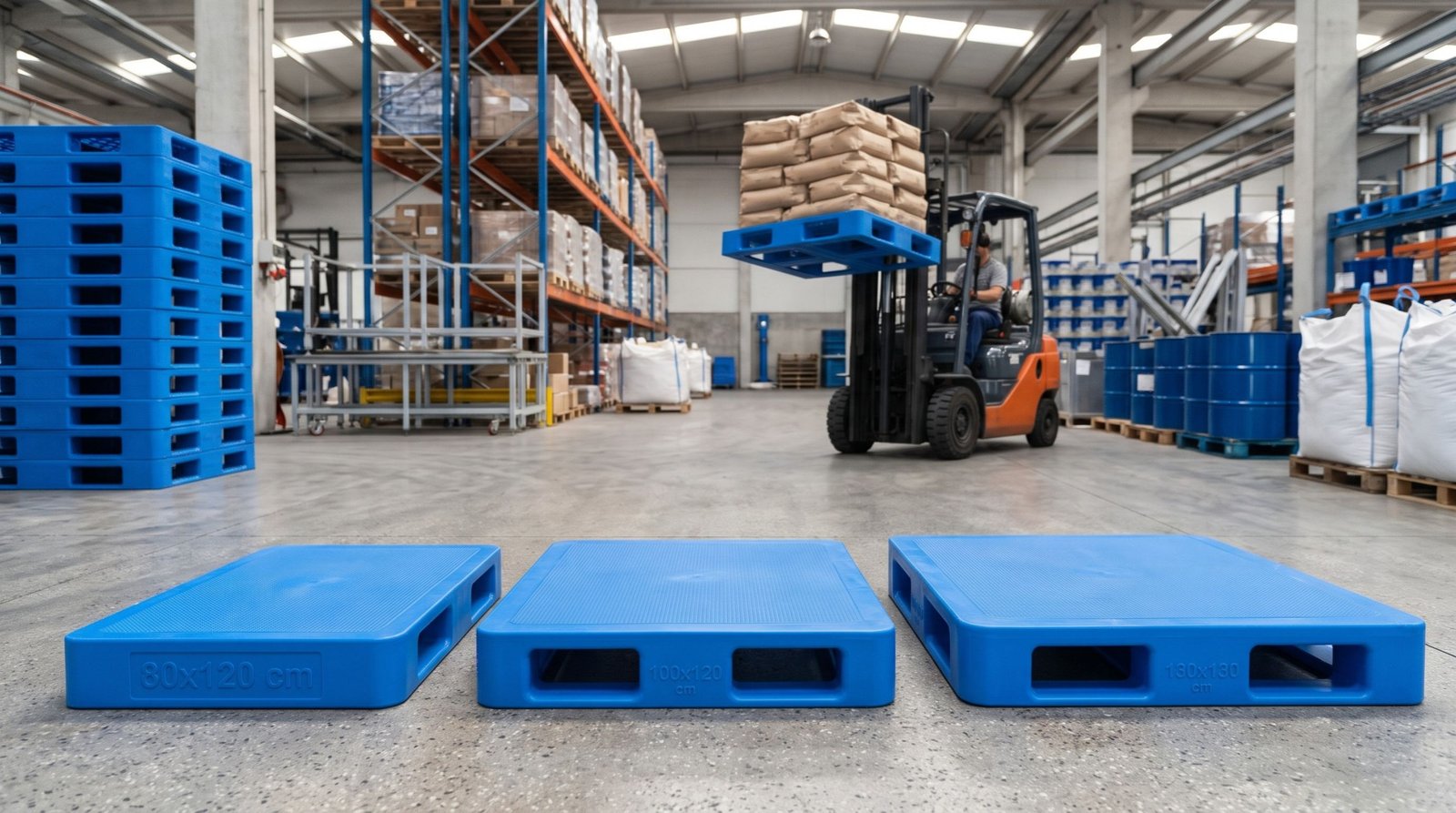
1. Food, meat and dairy (HACCP and corrosion control)
Food production and brining facilities are often wet, salty and acidic. Injection-molded “hygienic” pallets with concealed steel reinforcement may corrode internally if wash water gets inside. Corrosion can create contamination risks during food-safety audits. Rotationally molded PE pallets contain no steel. Their one-piece, non-porous surface does not absorb liquids and can withstand repeated washing with hot water or suitable chemicals.
2. Cold chain and sub-zero storage
Some standard plastic pallets become brittle in cold stores operating between -15°C and -25°C. Their flexibility decreases, and pallet feet may break during forklift handling. Depending on the formulation and design, rotationally molded polyethylene can retain impact performance at low temperatures and help reduce damage in cold-chain operations. Confirm the operating range for the specific product.
3. Heavy industry, automotive and chemicals
Automotive components, cast parts and drums of chemicals can create heavy, bulky loads. Where 100 × 120 cm pallets are not suitable, 130 × 130 cm square pallets distribute the load over a larger footprint. Depending on design and configuration, rotationally molded pallets can carry heavy dynamic loads and offer resistance to many acids and solvents. Verify capacity and chemical compatibility for the intended application.
Total cost of ownership (TCO) and sustainability
Purchasing teams often focus on a pallet’s unit price. In closed-loop logistics, the wider operating cost also includes pallet breakage, product damage, production stoppages and sorting damaged pallets for recycling.
Actual loss rates and payback periods vary by operation. A durable, corrosion-free design can reduce replacement and interruption costs over time. Rotationally molded PE pallets are made from a single material family and can be recycled at end of life where suitable collection and recycling facilities are available. This can support circular-economy and Scope 3 emissions programs.
Consider the service life and operating conditions—not purchase price alone—when comparing pallet solutions.