
What Is Rotational Molding and What Are Its Advantages?
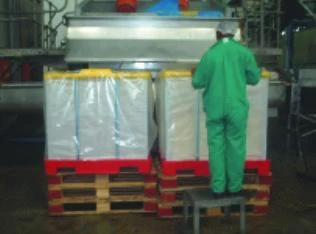
Rotational molding is one of the plastic manufacturing processes used to produce highly durable parts and components with a long service life. Also known as rotomolding or rotocasting, it is a thermoplastic process developed in the 20th century and adopted for many industrial applications from the 1960s onward. As its popularity and versatility have grown, it has become a preferred option in some industries alongside processes such as injection molding, thermoforming and blow molding. Rotational molding is valued for producing durable, complex hollow products that can be difficult or nearly impossible to make with many other plastic processes.
What can be made this way?
Large waste bins, canoes, toys, water tanks, planters, dolls and plastic balls are examples of products made using this process. It is particularly suitable for large parts that would otherwise be costly to manufacture.
Advantages of this manufacturing process
- Low material cost for large parts.
- Stable, robust components.
- No stress caused by melt flow during molding.
- No weld lines.
- Models with high impact resistance.
- Simpler mold design, with fewer requirements for undercuts and angled cams.
- Complex shapes can be produced with relative ease.
- Inserts such as nuts and screws can be added to the design.
- Most importantly, it can create fully enclosed hollow parts.
- No runner material is generated as production scrap.
- Material naturally builds up at corners, making them stronger.